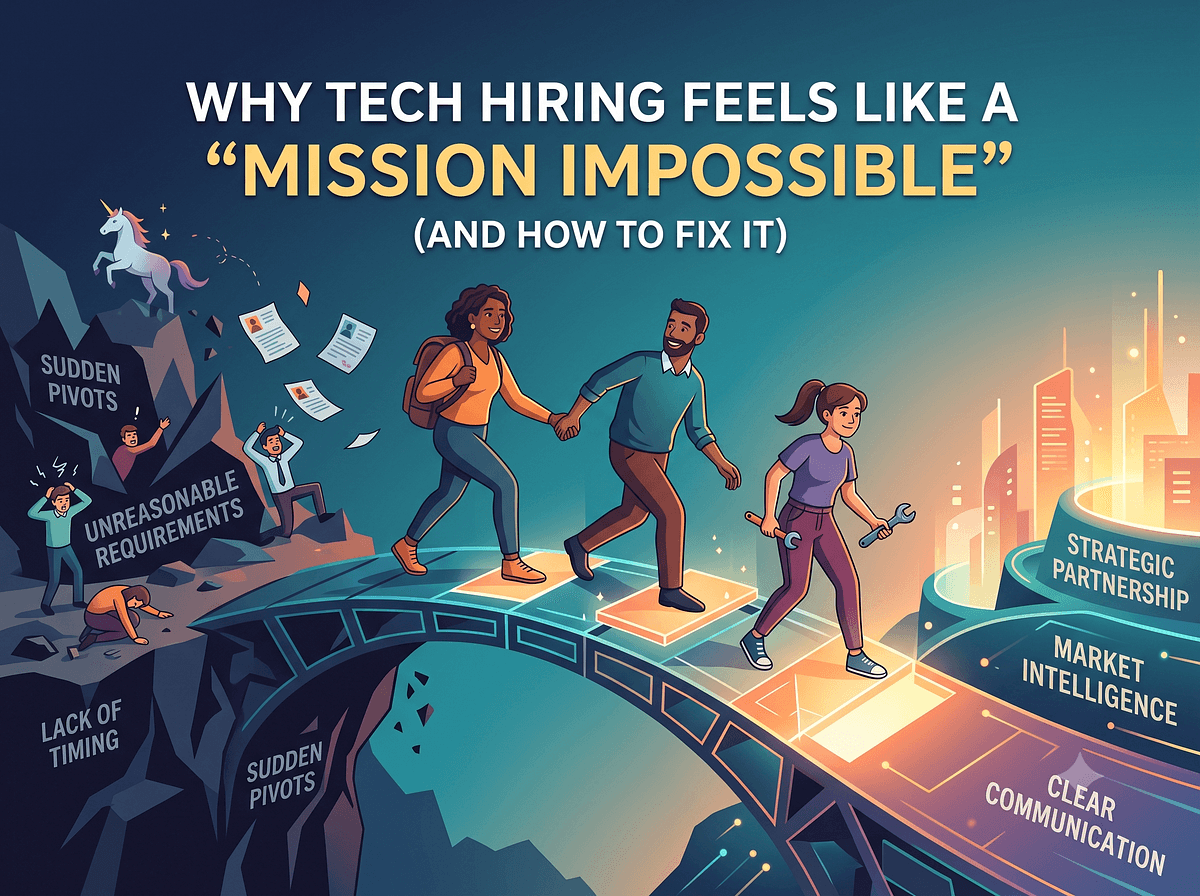
Imagine that, on paper, you’ve found the ideal profile: an architect with the perfect resume, mastery of complex programming languages, and a collection of certifications that would intimidate anyone. They are the “unicorn” candidate.
However, from the very first week of onboarding, you notice something isn’t right.
Team meetings that used to be collaborative brainstorming sessions have turned into monologues. Your senior developers, who always contributed innovative ideas, now prefer to stay in silence. They are exhausted from arguing with someone who is always right.
What’s the point of having the best player in the world if their style of play ends up hurting the rest of the team?
The Chronicle of a Death Foretold
What started as internal friction soon escalates. Deadlines are at risk, and your top talent, the ones you worked so hard to retain, are suddenly updating their LinkedIn profiles.
It’s a bitter irony: the “perfect” piece of the puzzle ended up breaking the entire board.
The “Perfect Resume” Trap
It’s tempting to chase a resume as if it were a guarantee of success. Many leaders dismiss great candidates without an interview simply because a CV is missing one specific requirement.
But paper is a poor storyteller. A resume doesn’t tell you how a person will react when a server goes down on a Friday afternoon, or if they’ll have the empathy to support a blocked teammate instead of just pointing out their mistakes.
This is the IT recruitment paradox: hiring based on a sheet of paper and ending up dealing with a cultural disconnect that no code can fix.
The Importance of Cultural Fit
At White Prompt, we’ve learned that technical talent is the engine, but human connection is the fuel. A “genius” who doesn’t fit your culture isn’t just a management headache; they are a business risk.
To avoid the “perfect resume” trap, we evaluate:
- Soft Skills: From the first point of contact, we aren’t just looking for someone who “speaks well,” but someone who knows how to listen. We look for signs of emotional intelligence that a resume rarely reveals: the ability to communicate complex ideas simply, professional conduct, and, above all, empathy.
- Alignment of Values: We seek people who don’t just “know how to do the job,” but who share our vision of collaboration.
The Result? Teams That Actually Last
By weighting cultural fit as much as technical background, we maintain an unusually low turnover rate for the IT industry. Most of our members stay for over three years.
Technical excellence is vital, but hiring for culture allows us to provide teams that don’t just code, they endure.
What about you? Have you ever hired a “superstar” who ended up being a cultural nightmare? We’d love to hear your story in the comments!